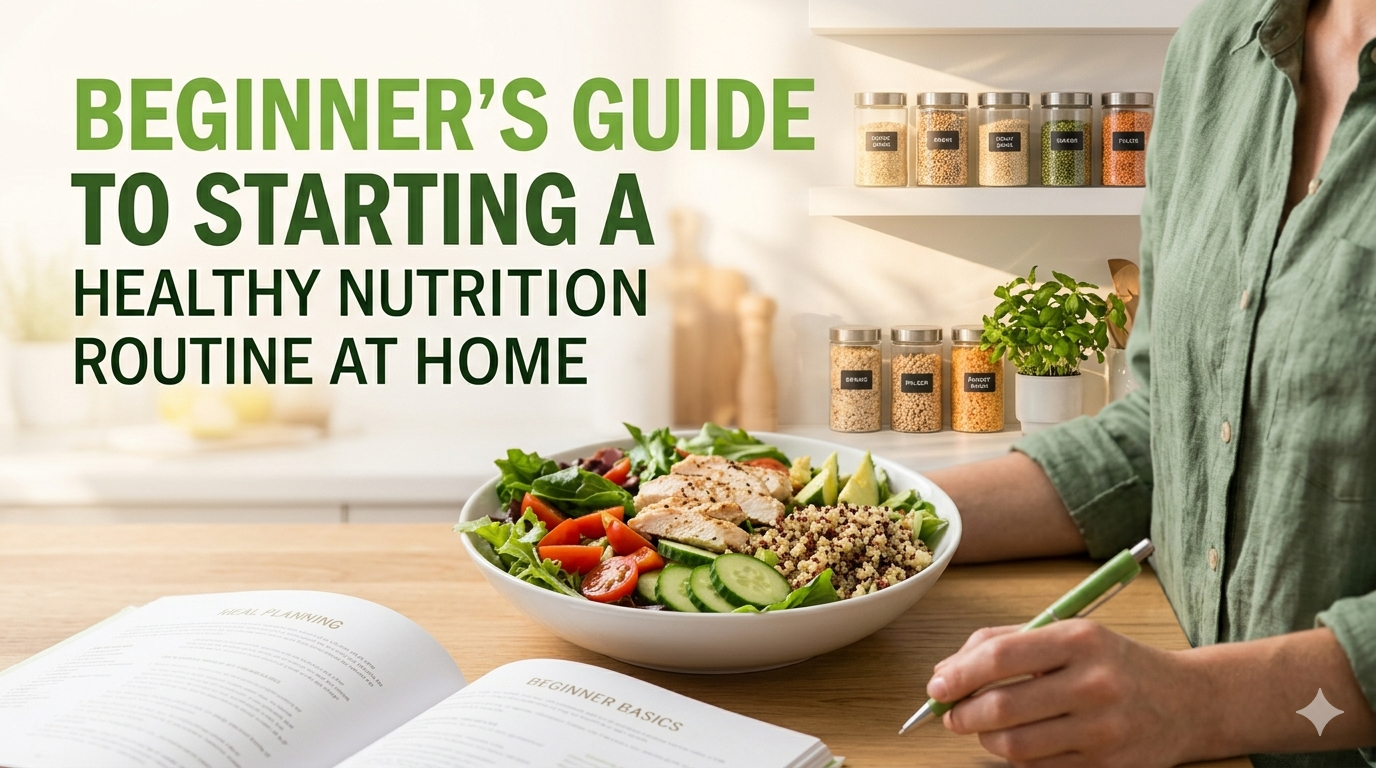
Beginner’s Guide to Starting a Healthy Nutrition Routine at Home
Starting a healthy lifestyle doesn’t require expensive diets, complicated meal plans, or hours in the gym. In fact, the best nutrition routines are often the simplest ones — easy to follow, realistic, and consistent.
If you’re just beginning your wellness journey, this guide will help you create a healthy nutrition routine from the comfort of your home.
Why Nutrition Matters
Your body needs proper nutrition to:
- Maintain energy levels
- Support metabolism
- Improve focus and productivity
- Build and repair muscles
- Support immunity and overall wellness
Many people focus only on exercise while ignoring nutrition, but both work together for better health results.
Remember:
You can’t out-train unhealthy eating habits.
Step 1: Start Your Day Properly
Your morning routine sets the tone for the rest of the day.
Healthy Morning Habits:
- Drink 1–2 glasses of water after waking up
- Eat a balanced breakfast
- Include protein in your morning meal
- Avoid sugary foods early in the day
A nutritious breakfast helps control hunger and improves energy throughout the day.
Meal replacement shakes can also be a convenient option for busy mornings when you don’t have time to prepare a full meal.
Step 2: Focus on Balanced Nutrition
Healthy eating is not about starving yourself.
Your body needs balance.
A good meal should include:
- Protein
- Fiber
- Healthy carbohydrates
- Vitamins & minerals
- Healthy fats
Examples of Healthy Foods:
Protein
- Eggs
- Chicken
- Fish
- Protein shakes
- Lentils
Healthy Carbohydrates
- Oats
- Brown rice
- Sweet potatoes
- Fruits
Healthy Fats
- Nuts
- Seeds
- Avocados
Fiber-Rich Foods
- Vegetables
- Fruits
- Whole grains
Balanced meals help keep you full longer and reduce unnecessary cravings.
Step 3: Stay Hydrated
Many people mistake dehydration for hunger.
Drinking enough water can help:
- Improve digestion
- Increase energy
- Support metabolism
- Reduce overeating
Try to drink water consistently throughout the day instead of waiting until you feel thirsty.
Herbal beverages or aloe-based drinks can also support hydration and digestion as part of a healthy routine.
Step 4: Control Portions, Not Happiness
One of the biggest mistakes beginners make is eating too little.
Extreme dieting usually leads to:
- Low energy
- Cravings
- Frustration
- Loss of consistency
Instead of eliminating all your favorite foods, focus on portion control.
Simple changes make a big difference:
- Smaller plates
- Less sugary snacks
- More protein
- Better meal timing
Consistency matters more than perfection.
Step 5: Avoid Processed Junk Foods
Processed foods often contain:
- Excess sugar
- Unhealthy fats
- Artificial ingredients
- Empty calories
Try to reduce:
- Soft drinks
- Packaged snacks
- Fast food
- Excess bakery items
Instead, keep healthier alternatives available at home.
Healthy environments create healthier habits.
Step 6: Create a Simple Meal Routine
You don’t need complicated meal plans.
Start with something realistic.
Example Beginner Routine:
Morning
Healthy breakfast + hydration
Mid-Morning
Fruit or healthy snack
Lunch
Balanced home-cooked meal
Evening
Tea/protein snack/light nutrition support
Dinner
Light balanced meal with vegetables and protein
Keeping a simple structure helps reduce random unhealthy eating.
Step 7: Move Your Body Daily
Nutrition works best when combined with movement.
You don’t need a gym to get started.
Try:
- Walking
- Stretching
- Home workouts
- Yoga
- Cycling
Even 20–30 minutes daily can improve energy, mood, and overall health.
Step 8: Be Patient with Results
Healthy living is a journey, not a quick fix.
Many people quit because they expect instant transformation.
Real results come from:
- Consistency
- Better habits
- Daily discipline
- Sustainable routines
Focus on progress instead of perfection.
Final Thoughts
Starting a healthy nutrition routine at home can be simple when you focus on small, realistic habits.
You don’t need extreme diets or complicated rules.
By improving your hydration, eating balanced meals, controlling portions, and staying consistent, you can build a healthier lifestyle step by step.
The goal isn’t temporary dieting —
it’s creating healthy habits you can maintain for life.