Meal Replacement vs Traditional Dieting: Which Actually Works?
Weight loss is one of the most common health goals today. But with so many diet trends, plans, and nutrition methods available, many people become confused about what actually works long term.
One of the biggest debates is:
Should you follow traditional dieting or use meal replacements?
Both approaches can help with weight management, but the real difference lies in sustainability, convenience, nutrition balance, and lifestyle compatibility.
Let’s break it down.
What Is Traditional Dieting?
Traditional dieting usually involves:
- Reducing calories
- Avoiding certain foods
- Following strict meal plans
- Eating homemade or natural foods in controlled portions
Popular examples include:
- Low-carb diets
- Keto diets
- Intermittent fasting
- Calorie-counting plans
The main goal is to create a calorie deficit so the body burns stored fat for energy.
What Are Meal Replacements?
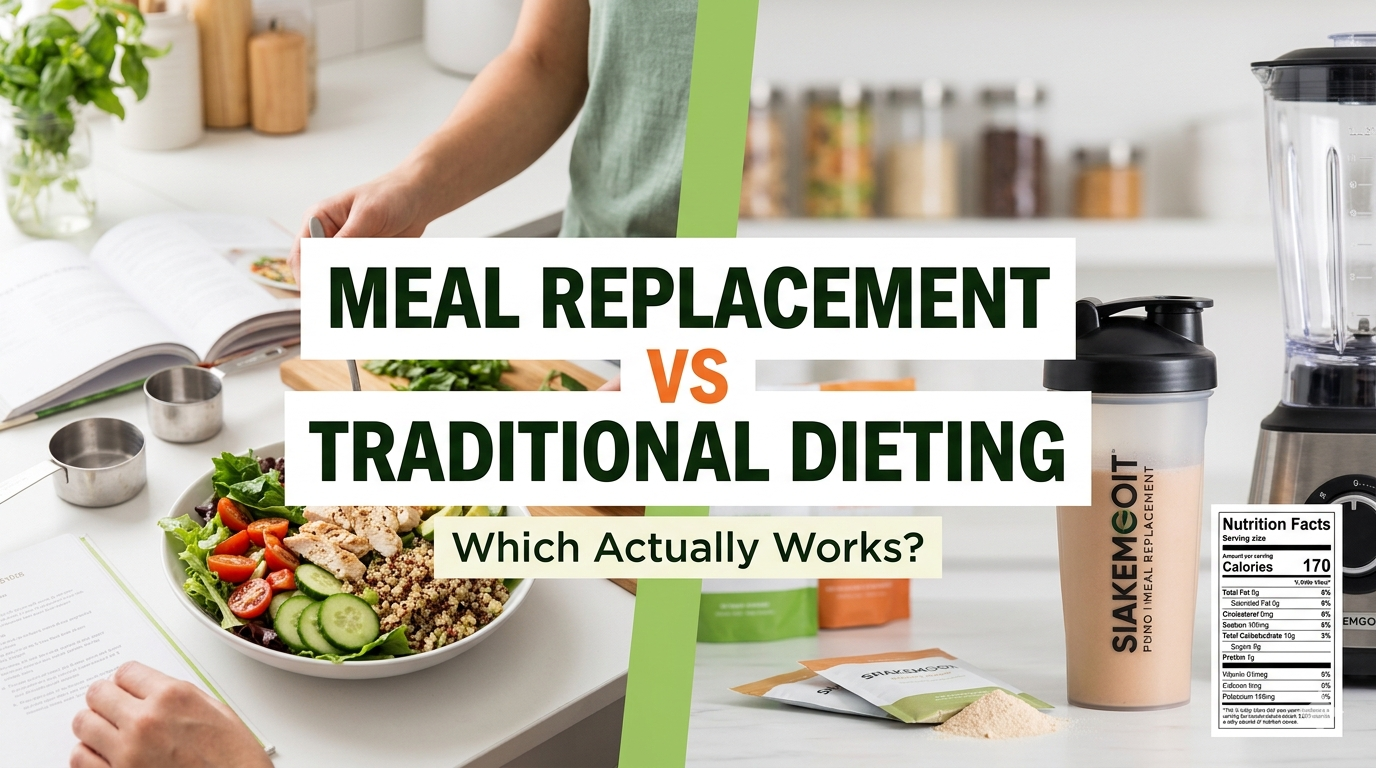
Meal replacements are designed to provide balanced nutrition in a quick and convenient format, usually as:
- Protein shakes
- Nutrition shakes
- Bars
- Ready-to-drink meals
A good meal replacement typically contains:
- Protein
- Vitamins & minerals
- Fiber
- Controlled calories
- Essential nutrients
They are often used for:
- Weight management
- Busy schedules
- Portion control
- Fitness nutrition
The Biggest Problem with Traditional Dieting
Many traditional diets fail because they can become difficult to maintain consistently.
Common challenges include:
- Constant hunger
- Time-consuming meal prep
- Cravings
- Lack of portion control
- Social eating difficulties
- Nutritional imbalance
People may start strong but eventually return to old eating habits.
This is why many “quick-fix diets” only work temporarily.
Why Meal Replacements Are Becoming Popular
Meal replacements simplify healthy eating.
Instead of guessing calories or preparing complicated meals, users get a controlled and balanced option within minutes.
Benefits include:
1. Portion Control
One major reason people struggle with weight management is overeating.
Meal replacements provide controlled calorie intake, helping reduce excess consumption naturally.
2. Convenience
Busy lifestyles make healthy eating difficult.
Meal replacement shakes can be prepared quickly at home, work, or while traveling.
This makes consistency easier.
3. Balanced Nutrition
Many people skip essential nutrients while dieting.
Quality nutrition shakes often include:
- Protein
- Fiber
- Vitamins
- Minerals
This helps support energy and wellness while managing calorie intake.
4. Better Consistency
The best nutrition plan is the one you can follow consistently.
Meal replacements reduce decision fatigue and simplify daily routines, making it easier for many people to stay on track.
Does That Mean Traditional Dieting Is Bad?
Not at all.
Traditional healthy eating still plays an important role in long-term wellness.
Whole foods like:
- Vegetables
- Fruits
- Lean proteins
- Healthy fats
- Whole grains
are essential for overall health.
The most successful approach is often a balanced combination of:
- Healthy regular meals
- Smart portion control
- Convenient nutrition support when needed
Which One Actually Works Better?
The answer depends on:
- Your lifestyle
- Schedule
- Eating habits
- Consistency
- Personal goals
Traditional Dieting Works Best For:
- People who enjoy cooking
- Those with disciplined eating habits
- Individuals who prefer whole-food meal planning
Meal Replacements Work Best For:
- Busy professionals
- Beginners starting a wellness journey
- People struggling with portion control
- Those needing quick healthy options
The Real Secret: Sustainability
Extreme dieting usually fails because it’s hard to maintain long term.
Sustainable habits create lasting results.
Whether you choose meal replacements, traditional dieting, or a mix of both, consistency matters more than perfection.
Small healthy choices repeated daily lead to real transformation.
Final Thoughts
There is no single “perfect diet” for everyone.
Traditional dieting offers flexibility and natural food choices, while meal replacements provide convenience, nutrition balance, and portion control.
The best strategy is the one that fits naturally into your lifestyle and helps you stay consistent without feeling overwhelmed.
Healthy living is not about starving yourself — it’s about creating habits you can maintain for life.